Archive for August, 2011

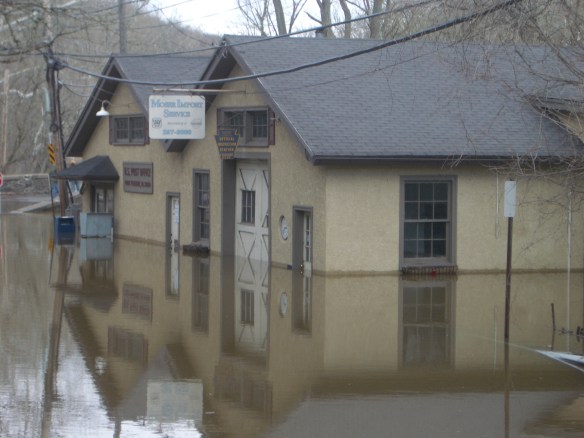
Now that you’ve survived a storm, the water has receded and you’ve got your power back, what next? In all likelihood, you’re probably dealing with a wet rug or carpeting and dreading the idea of tearing it all up and throwing it away. But do you really need to do this? The answer is, “it depends.”

If your flood was caused by a stream or river, chances are you’ve got mounds of mud in your basement. While this silt may be great for growing crops, it’s really bad for carpets and the amount of money you’d have to spend cleaning up is probably greater than what it would cost to rip it out and buy it new after your basement has dried out. In addition, there’s a good chance that the water was polluted and maybe smelly, so you probably want to get it out of your home ASAP!

On the other hand, if the water was relatively clean, and your house doesn’t yet smell like a wet dog, you might be able to salvage the carpet. But it really depends upon the situation.
(more…)

About these ads

You survived the storm, but now you have to clean up the mess. Maybe your basement or first-floor got flooded. Now’s it’s time to clean up!

! Be aware of dangerous electricity !

I can’t stress this enough. When you’re wet, you conduct electricity well enough to kill you if you get zapped. If you are working down in a flooded basement, do not risk touching an electrical outlet or working with plug in devices with your bare, wet hands, especially if you’re standing in the water.

If you absolutely must deal with something electrical, please, wear thick rubber gloves to insulate your hands. And don’t be standing in a puddle while you do so!  You’ve been warned!

If water is still entering your home…

Active water leaks are a real nightmare. If your foundation is still surrounded by water and water is flowing into your basement, the chances are good that you don’t have a big enough pump to get the water out faster than it can enter.

Often, water will seep up around a “floating slab” in your basement. The channels cut around the perimeter are meant to allow water to drain out but they do just the opposite during a big flood. And there’s pretty much nothing you can do to stop it.

(more…)

Hurricane Irene - 8-27-2011

So you’re glued to the TV, watching as the “storm of the century” approaches. What to do?

I’m a big believer in knowledge and education but honestly, I try to tune out big media coverage of the storm. Why? Because they do everything they can to hype the storm. The bigger and scarier they make it seem, the more viewers they attract.

I’m going  to take a little different approach than most of these lists. There are hundreds of “hurricane check lists” telling you to fill your bathtub with water and stock up on batteries and food. No, I’m going to give you the practical homeowner tips that nobody else tells you.

Tip #1: Monitor the pure satellite images

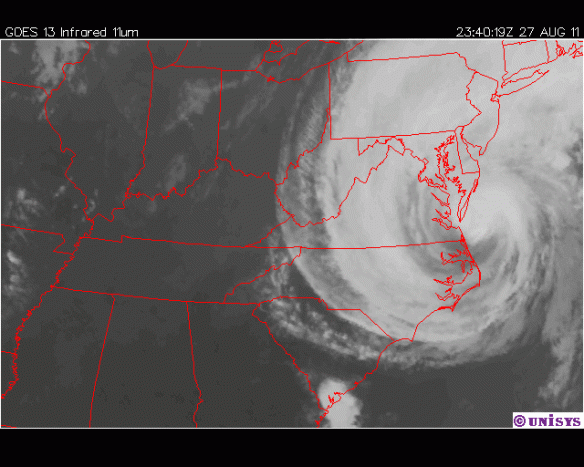
My favorite site for no-nonsense satellite images is Unisys weather. Yes, the old-time computer company has the basics. The most informative images are the standard IR (infrared) or the WV (water vapor) image. These images give a great overview of what’s happening on a large scale.

Tip #2: Keep an eye on rivers and streams

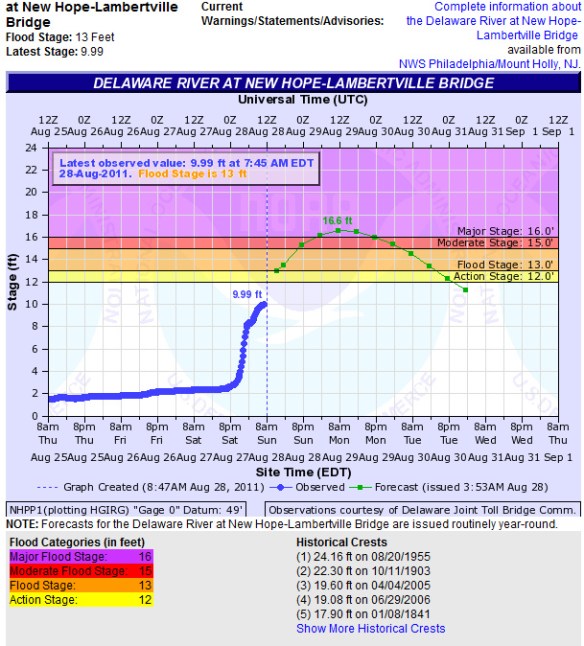
The National Weather Service has a great website that few people know about. It has detailed information about projected water levels based on gauges and computations. Here’s a link for the Delaware River gauges in my area. Here’s the national map so you can choose the information for your area.

River levels with projections after Hurricane Irene

(more…)

Summer rains bring flooding

There’s nothing like a gentle Springtime rain. But Summer often brings us torrential downpours, and along with them, roof leaks, incredible moisture and mold!

A few days ago, we had record rainfalls in Eastern Pennsylvania – five inches of rain in some areas. This fortunately came after an extended dry spell, so the rivers didn’t flood this time. We got really lucky.

These heavy rains often bring high winds, fallen branches and roof damage. Sometimes, they’ll just lead to enough leaking for you to notice. Maybe there’s a discoloration on your ceiling or window jamb. Whatever the sign, please pay attention. Failure to deal with a “small” leak now can lead to thousands or tens of thousands of dollars of damage to your house later. Worse, the accompanying mold can pose a severe health/allergy risk.

When dealing with leaks, you need to take several steps in order to minimize the chance of more serious damage to your home:

(more…)

Kudos MohawkIt’s easy to get dragged down by all the upsetting news – natural disasters, the stock market, wars, terrorism…if you believe the news, we’re living in horrible times, worse than ever before in history.

But step back and think about it. We’re living in a time with a quality of life unimaginable through most of history. Most of us don’t have to worry about famine or disease. Our houses are filled with gadgets that would have been impossible or cost millions of dollars just a generation ago. Our vehicles are cleaner and more efficient than ever. We live in comfort. Our lives are long. Technology and medicine are advancing at an accelerating pace.

I’m a realist, and to me, realism means seeing both the bad and the good in the world. So I started a company, OurKudos, that’s focused purely on the positive. I wanted a place people could go to smile and forget about all the negative “stuff” going on, maybe just for a few minutes. My hope is that, by exposing people to good news, that maybe they’ll get an attitude adjustment. Maybe by learning about the good deeds being done by local heroes, they’ll feel different about the people in their lives and maybe even try to positively change something in their community.

So I bring you the first public showing of OurKudos’ first step into “social good” – OKCheers!