In the last article, “Is your boiler stealing your money?“, I discussed why most boilers are ripping you off. Contrary to what almost every HVAC saleperson or tech will tell you, your boiler does not operate at 84% efficiency. It doesn’t operate at 80%! Heck, much of the year, it doesn’t operate at 50% efficiency!
To review, the reasons for this include:
High operating temperature
Minimal insulation
Infrequent use
→ Outrageously high standby losses
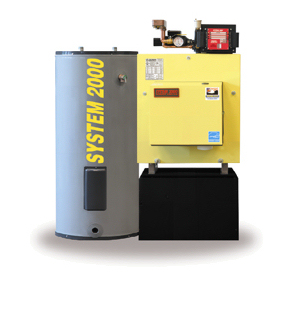
In this article, I’m going to discuss how to do it right. But if you’re too lazy to read the entire article, stop right here and go to the Energy Kinetics website.
If you have a boiler, chances are, it’s wasting a lot of energy!
At today’s fuel oil costs, (~$3.50/gallon in March 2011), it’s more important than ever to conserve. This is definitely one of those cases where it pays to do your homework.
What if I told you there’s a good chance that your boiler is half as efficient as they told you? You wouldn’t be happy, would you?
Let me tell you a personal story. When I moved in my house, it had a relatively modern boiler, rated at 82% efficiency. It heated the houe and the water. I figured that was pretty good – no need to upgrade, right?
The CREE CR6 is the latest in a line of energy efficient LED lights made by CREE. This light addresses some of the issues of the earlier lights, allowing dimming down to 5% and having a compact, light-weight package at about half the cost of earlier models.
It draws only 10.5 Watts yet produces as much light as a 65W incandescent bulb, so it’s definitely an energy saver. That’s a 55 lumen/Watt rating, putting it in the same ballpark as a normal CFL spiral bulb. But the fair comparison is with dimmable fluorescent downlights. Those range from 40 to 50 lm/W, so on average, you get 10%-25% more light from the CREE than you would the equivalent fluorescent.
I admit it, I don’t often get excited about water saving. In the past, you may have used those crappy little low-flow shower heads that seemed to spray a mist of water rather than a nice shower. Those things set back the entire industry for years.
Shower heads today are a different story. I recently read some great reviews on Amazon.com about the American Standard FloWise shower head. This convinced me to give it a shot.
I bought the FloWise for about $40 on Amazon. I’ve added it to my store now that I’ve played with it and know it’s a “Geek-worthy” product.
Rather than just re-type everything I spent time producing in video, I’ll just give you a summary:
FloWise shower head
Cost about $40
Works great. Low-flow at 1.5 GPM (gallons per minute). Full-flow at 2.0 GPM
Saves about 40% on your shower water usage
Depending on your water heating costs, it will pay for itself in two years or less. In my case, it’s under a year. If you have kids who take long showers, it will pay for itself in less than 6-months.
Caveat: if you have really long, thick hair, this might not be for you. But for most people, it will work great.
Follow-up: Usage Recomendations
Having now had the opportunity to use this more, I wanted to give some usage recommendations so that you get the most out of your hot-water saving shower head.
First, be aware that when you first turn on the shower, it’s going to take longer for the shower water to get warm because there’s less water moving through the pipes. If you’re moving from an old, non-water saver head to this one, you may think something is wrong because it takes so long.
Whenever you take a shower, the water has to get all the way from your water tank to your shower, so if your old shower had moved 4 GPM and this one move 1.5 GPM, it’s going to take almost three times as long for that water to arrive. This can be a bit frustrating and it will make you feel like it’s wasting water when in fact both will use exactly the same amount.
In order to minimize the wait, I suggest turning the water on full hot initially and setting the shower head to one of the turbo modes. This will do several things. First, the hot water will heat up the pipe faster because more hot water will be flowing through the pipe. Second, it will get to the shower faster because just the hot water is running and because the shower head is letting more water through. Just remember to turn it to a comfortable temperature before you get in!
Next, and this is probably obvious, for most efficient water usage, use the shower on the default, low flow setting when you’re just rinsing your body and doing general cleaning. But when you wash your hair, you’ll probably want to turn it to one of the turbo modes to make it easier to rinse the soap out. I’ve got pretty long hair for a guy and for me it works pretty well. But like I suggested in the video, if there’s someone in the household with long hair, they might not find the amount of water to be satisfactory. Fortunately, my wife and I have separate showers, so she can have her own shower head and I can have mine!
Just got a Pharox 300 dimmable LED bulb after my nephew (thanks Jason!) reported success with his. Guess what? It actually works as advertised! The thing dims right along with a conventional incandescent bulb – finally!
This is a standard Edison bulb, so you can use it in just about any fixture. The light is bright white and it stays that way as it dims. I know we’re all used to the dull yellow-orange light from an incandescent as it dims, so seeing a dim white might at first be a little disconcerting but over time, I suspect people will get used to it.
The Pharox is surprisingly bright for a bulb that only uses 6 watts. Remember that the output of LEDs is somewhat directional, so you’ll get the most light if you use this in a desk lamp that points towards your work surface or put it in a light fixture above you that’s pointing down. In this application, it works really well.
The dimmability is really impressive. I’ll have to do a video showing how it dims along with a conventional bulb. I’ve never seen an efficient bulb work this well. Every other one that I’ve used cuts out after it dims just a little bit but this one actually provides useful dimming. Very cool!
I’ve ordered another four to try in more fixtures around the house. At under $30, they may seem expensive (ok, they ARE expensive) but they’re a steal compared to other high quality LED bulbs. And for the energy savings, you’ll pay it back in a year if you put some in the kid’s rooms!
I’ll do more reports about it when I get some longer term tests. But for now, it’s definitely worth a try!
If you like this blog, then you’ll really like Home Energy Magazine!
Here’s their promo for the latest issue:
If there’s one thing contributing editor Steve Mann learned while attending the 2010 Passive House Conference in Portland, Oregon, it’s that the Passive House approach is anything but passive. In this issue of Home Energy, Steve explains the history of the Passive House standard, where it stands today, and what its future holds. Steve is a HERS rater, Green Point rater, LEED AP, Certified Energy Analyst, serial remodeler, and longtime software engineer.
Read the excerpts below to learn why senior building science consultant John Tooley says we need to Raise the Bar for Home Performance, and how a standard retrofit package can save a homeowner money in The Robo Retrofit House. This issue also features real-life horror stories from the field of energy auditing and a look into how students at Syracuse University experienced a Multifamily Performance Program in on-campus housing.
Click here to access the current issue. If you are a current online subscriber to Home Energy, click here to log in.
Time to check your air filters! This filter was blue when new.
It’s been a long winter for many of us, and that means the furnace has run a lot! The more it runs, the dirtier your air filter gets.
There’s a ton of information on the web about air filters, MERV ratings, and so on, so I’m not going to repeat that. I’ll give you some links at the end of the article. I’ll discuss the adverse effects that a dirty or improperly installed air filter actually has on your system’s efficiency and potentially, your health.
The old saying that you should check your air filter once a month isn’t accurate. It depends on the type of air filter, how clean you keep your house and how long the system actually runs. The main thing is, if you haven’t checked your air filter in a while, do it now!
A dirty air filter compromises your heating/air conditioning system more than you think. The dirt restricts the air flow through the system. In some cases, this can increase the power draw from the blower. In other cases, it just diminishes the amount of air that comes out your vents. In either case, a dirty air filter equals lower efficiency.
Disclaimer: while I think all the information presented here is accurate and scientifically valid, you are advised to consult a *professional before changing your home. This article covers just one component of your home. Your specific home may have conditions that override the comments contained herein.
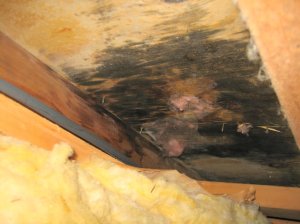
*By professional, I mean an experienced building scientist, not your local carpenter or roofer or even a structural engineer or architect. While many of these people are artists in what they do, most have no training in building science or engineering and cannot be trusted to properly design a roof assembly. Likewise, you wouldn’t hire a building scientist to swing a hammer and build your roof! Cathedral ceilings are very popular – they give rooms a feeling of openness and an added aesthetic dimension. At the same time, they are responsible for a variety of building problems and homeowner heartbreak. What causes these problems and how do you avoid them?
There are a variety of climate zones. The south-eastern United States is hot and humid, while the north east is cold. The mid-Atlantic states, where I live, is mixed – during the summer it is hot and humid, during the winter it is cold. The south west is mostly hot and dry and the northwest is moderate in temperature but very humid! Each of these climate zones has its own particular building details. However, all must follow the laws of physics.
Physics tells us that moisture moves from areas of high humidity to areas of low humidity. If it’s more humid outside, moisture wants to come in. And when it’s more humid inside, the moisture will move toward the outside. Simple!




 Ted's Energy Tips