Why do I have condensation in the middle of my windows?

A Sure Sign of Collapsed Glass

Collapsed Glass Syndrome

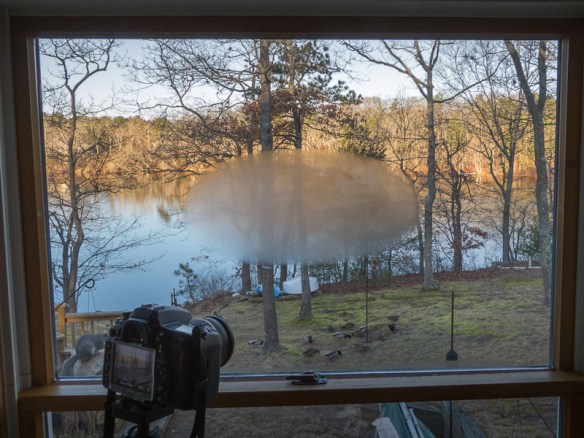
I was recently visiting my brother and he pointed out a strange condensation effect he was having on some double glazed windows. Condensation formed in an oval pattern in the middle of the windows. This is really strange because condensation forms on the coldest parts of windows first. Thermal windows usually insulate best at their centers so condensation starts forming at the edges. But these windows were showing exactly the opposite condensation pattern as shown in the photo above.

Continue reading

Insulating Basement Crawl Spaces

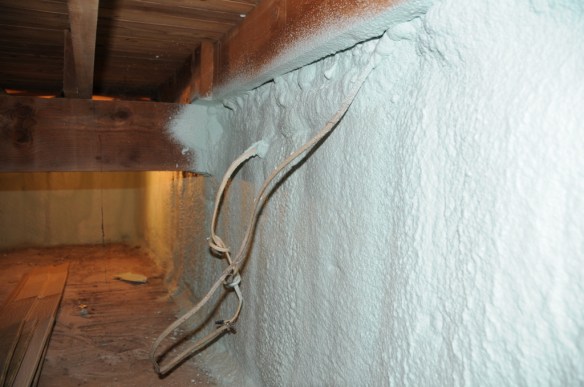
Spray foam on crawlspace walls

Crawlspaces – those nasty, damp, moldy spaces under your home that you dread entering. They’re one of the least understood parts of a home and the source of countless problems. In this post, I’ll review some of the worst problems and how to avoid them.

Crawlspaces often have two big issues:

  1. Water / moisture – leading to mold and wood rot
  2. Cold / drafty – leading to uncomfortable conditions and wasted energy

Continue reading

How NOT to insulate your house

Sometimes insulation hides bigger problems.

The other day, I was talking with a friend of mine – an energy auditor who was a builder for decades. The topic came around to bad advice that “experts” give about insulating. It’s something that we both feel passionate about because homes get ruined and people get sick when innocent people follow this bad advice. We both adhere to a similar do no harm philosophy of  “if it’s worked for decades as-is, don’t mess it up!”

There’s a science to building and the tighter and more energy efficient you make a home, the more important it is that you do things “right.” It’s like the difference between making a log raft and a submarine. A log raft is leaky, but it’s forgiving because it floats by virtue of the logs. It doesn’t have to be water-tight. A submarine had better be water tight and structurally sound or you’re going to drown and get crushed by the intense pressures of the ocean.

Unfortunately, unlike boats and submarines, homes today are often built in the cheapest way possible, with little regard to physics. Renovations are even worse because people often hire unqualified “low-bid” contractors to do the work without realizing that the few thousand dollars that they save on construction may cost them tens of thousands to fix or even send them to the hospital due to mold or poor indoor air quality.

The problem is, people familiar with building science are extremely rare, as are the chances of finding a builder who knows how to make a healthy, energy efficient home. That’s why you’re here reading this now – you want to learn what not to do when insulating and how to do it right.

Continue reading

Why do I have moisture in my walls?

The inside of a wall filled with entrapped moisture

I just received a question that was too complex to answer quickly, and so interesting that it deserves an entire post. Unfortunately, it represents a situation that occurs far too often.

To summarize, the question came from a reader who opened a small hole in their wall and found condensation on the vapor barrier at the inner surface of the wall. The question is, what could cause this?

Here are some more clues:

  • The moisture was observed during the winter
  • The hole was cut in a south wall
  • The home has 3″ foam board sealed to the exterior wall
  • A 2×4 framed wall was built inside this wall and insulated with Roxul
  • A 6-mil poly vapor barrier was then applied just behind the inner sheet rock
  • They did not measure high moisture towards the outer wall
  • The wall was built during a humid summer

Continue reading

Insulating walk-in attics

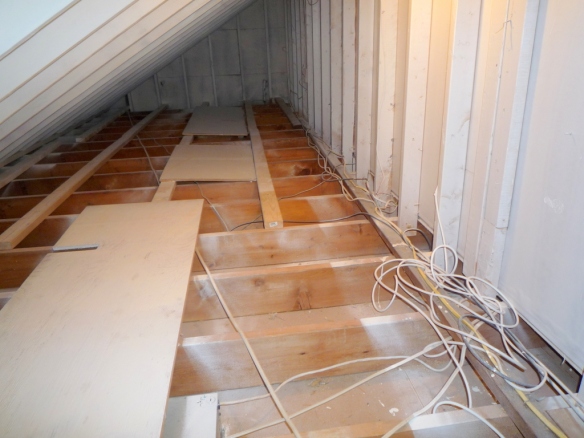
A walk-in closet behind a knee-wall

Most walk-in attics are behind knee-walls – those little walls about 3′-5′ tall that intersect the sloping roof line. Usually the entire space would have been an attic, but they were reclaimed for living space and a wall was installed to make a bonus room. The resulting rooms are often neglected and poorly conceived and are the least comfortable areas of the house. In addition, their design leads to a variety of insulation and moisture problems that can be tough to rectify. Continue reading

Attic insulation problems and solutions – Part 2

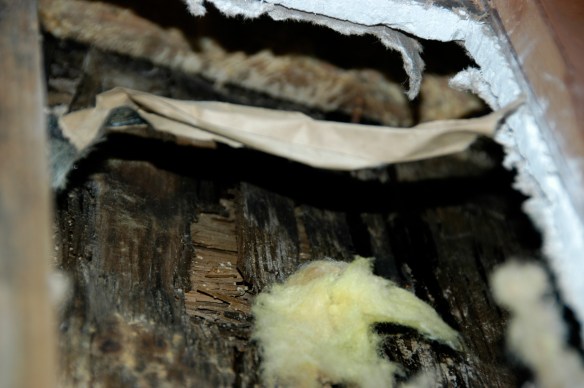
Fiberglass insulation against roof deck plus moisture = roof failure

In the first post, we looked at how adding insulation could lead to frozen pipes if the insulation was put in the wrong location. But, just like a sweater, if you put everything you want to be warm inside the insulation, you can keep your house and pipes happy and energy efficient.

This time, we’re looking at how to install insulation properly so that you don’t rot out your roof. Unfortunately, the photo above shows how not to insulate under your roof!

Continue reading

When can adding insulation cause problems?

What happens if you add insulation?

Sometimes, attics and insulation can be confusing. Usually they make a lot of sense, but occasionally, they’re really confusing! So when people ask “how do I insulate my attic?” – the only correct answer is: “it depends…”

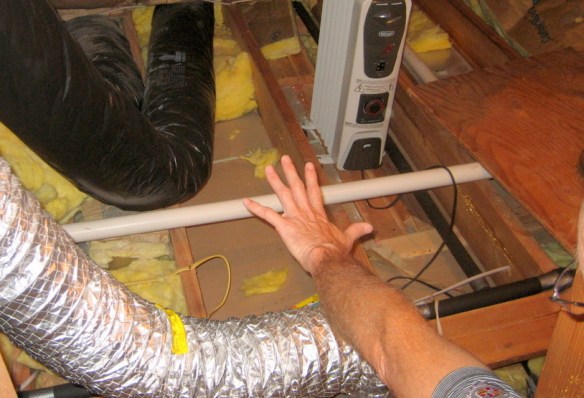
Suppose you purchased this house this past October. You get your first electric bill and it’s  really high, so, after reading Ted’s Energy Tips,  you go up to the attic to look for problems and find this. “Holy cow!” you think – not only is there a space heater up in the attic, there’s all this missing insulation.”

Continue reading

Are you unintentionally poisoning your family?

A missing barometric damper

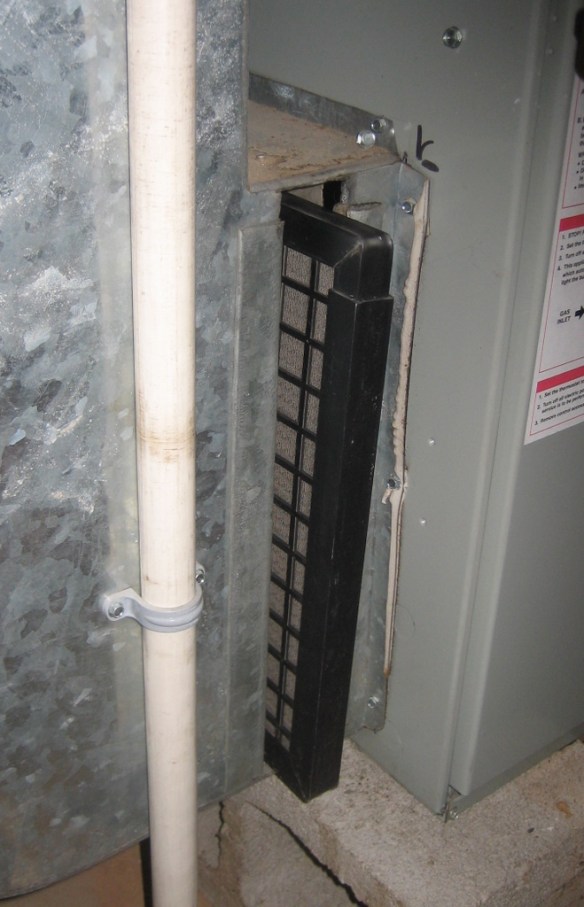
A family friend recently told me of “issues” with their home heating system – “when it runs, the lights get halos around them from all the soot in the air.”

I couldn’t believe it when I heard this, and immediately warned him that the condition likely is making his family sick and could easily kill them. No joke.

Carbon monoxide poisoning is the “leading cause of accidental poisoning deaths in America” – it’s colorless, odorless and quickly affects your brain, knocking you out then killing you. In lower amounts, it can lead to chronic headaches, dizziness, depression, nausea and a host of other problems.

As we tighten up our homes to make them more energy efficient, we have to be particularly vigilant about keeping any combustion devices in the home tuned up and properly vented.

Let’s look at this in more detail….

Continue reading

Reduce your heating bills – seal your ducts

This is wasting more energy than leaving a window open

I admit it – I go crazy when I see leaky ducts. I’m not talking about ducts that have little leaks, I’m talking about problems that cost you hundreds of dollars per year and could be fixed in a few minutes with a piece of tape.

Incompetent heating contractors hate me. Why? Because I’m on a mission to give you the information you need to know when they’re ripping you off.  On the other hand, quality contractors love my information because I arm you with knowledge so you can tell the difference between the good ones and the bad ones.

Sound interesting? Read on!

Continue reading

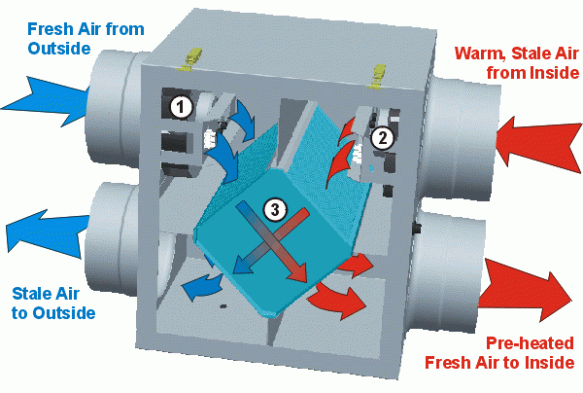
Heat and Energy Recovery Ventilators (HRV and ERV)

This post follows up on the last post, covering how to get rid of smells in your home.

One of the best ways to get rid of smells or “staleness” in your house is to bring in fresh air. We all do this during these wonderful autumn days when we open the windows and let the fresh air flush out our home. Wouldn’t it be great to be able to have fresh air year round?

Some people try this by cracking the windows, but this has its downsides. During the winter, the outside air is cold and dry. When you bring in that air, you have to spend energy heating it. Plus, it’s so dry that it sucks the moisture out of the air, leading to uncomfortable conditions in the house.

Continue reading