
Almost everybody gets thrown off by this, but I moderate comments to avoid spammers. The downside of this is that you won’t see your comments post until I’ve had a chance to review and approve them. Sometimes this can take days (sorry!) Thanks for your patience.
Ted’s Energy Tips now has an AI companion!
Reply
I thought it might be useful to have an AI that uses the information on my site to help answer your questions so I loaded this entire site into ChatGPT. If you’d like to try it, click this link.
Please note – this is an experimental feature. These AI systems are notorious for making things up so if it gives you an answer that seems wrong, it probably is! Also, you should always double check the advice it gives, just like you’d do if you asked a person 🙂
Please leave me feedback and let me know what you think. Unfortunately, I won’t necessarily be able to fix any errors because these AI systems just look at the text you feed them. However, it’s good to know if it’s doing anything blatantly wrong. Also, If you find it useful, I’d like to hear that too.
Note: After the AI answers your question, it takes a long time trying to scan this site for other information. Sometimes, it works but other times it complains and fails to give an answer.
Yikes! Apologies for the lack of replies
I just discovered that WordPress had turned off my notifications again, so I hadn’t received any of your comments for a few months! I’m so sorry for this.
I’ve tried to get back to everyone who posted questions, but if I missed you, please post again, and I will get back to you as soon as possible. Thanks for your patience!
How Can I Reduce My Heating Bill?
If you’ve read my posts before, you know I’ve had mixed feelings about heat pumps. On the one hand, they’re great. On the other, historically, natural gas, and even heating oil, have provided heat for your home cheaper than the electricity based heat pump. But, for many reasons, especially environmental ones, my preference is to use heat pumps for primary heating and cooling.
Fossil fuels are a dead end
This last year, we’ve seen historic price increases in fossil fuels that have hit almost every household. Heating oil, natural gas and propane bills shot up, often doubling your heating bills. On top of that, automotive gas prices increased like crazy. These price spikes inflated the prices of just about everything – from fertilizer to vegetables. From avocados to sneakers. Fossil fuel prices affect almost everything.
Now is the time to add a heat pump
If you have central air conditioning, you can probably switch to a heat pump without too much difficulty.
An air conditioner and a heat pump are virtually identical. The difference is, a heat pump has an extra valve that allows the indoor air to blow cold or hot. You might have noticed that the outdoor air conditioner blows out hot air when it runs. A heat pump just switches it so that the hot air blows indoors instead of outdoors. When the air blows hot inside, the cold air blows outside. It’s the way these refrigerant based systems work. One side is hot and the other side is cold.
The great thing about heat pumps is they can be really efficient. Modern heat pumps give you three to four times as much heat out as the electrical power you put in. Think of a hair dryer. That’s considered almost 100% efficient because it converts those 1,500 electric Watts into an equivalent amount of heat. A heat pump, seemingly miraculously, can take the 1,500 Watts and convert it into the equivalent of 5,000 Watts of heat.
If you replace your air conditioner with a properly sized heat pump, you can heat your home super efficiently for most of the year without burning a drop of fossil fuels at home. You can do a heat pump retrofit if you have an existing furnace that burns oil, propane or natural gas and uses the same air handling system for air conditioning. You can continue using the furnace for the coldest parts of winter or when you need to warm your house quickly.
How much money will I save by using a heat pump?
There are a lot of details that go into answering this question. The first is: “how much does electricity cost per kilo-Watt-hour?” and “how much does my gas/oil/propane cost per gallon?”
It does get more complicated. Your local climate makes a huge difference. For example, if you live in a place where the winters are relatively mild, you can probably heat your home all year with just the heat pump and use no fossil fuels. In fact, if you live in a place like that, fossil fuel furnaces are probably relatively rare. In that climate, heat pumps are mostly a “no-brainer.”
Where it becomes trickier is where the winters are long and cold. Heat pumps will work but may struggle when it gets much colder out. In fact, the heat pump is most efficient when it’s only “cool”, like 45 degrees, F. As the temperature drops, the heat pump loses efficiency and also puts out less heat. This is exactly the opposite of what you need! But that’s the physics of it. So if you live in a climate where it’s below freezing for long periods of time, the heat pump might not be the best alternative. However, even then, a heat pump can reduce your utility bills.
During the Spring and Fall, we often start using our heating systems to take the edge off. Maybe it’s 45-60 degrees out. With a heat pump working in its optimal range, you can heat your home without using any fossil fuel. This might reduce your gas/oil/propane bills by 50% or more. Again, it depends on the cost of electricity versus the cost of your fuel.
Let’s run a few examples. Currently, home heating oil is up to about $5/gallon. That’s crazy high, so I won’t use that for comparison. Instead, I’ll use $3.20/gallon, which is about what it cost in PA during the winter of 2021/2022. Electricity here cost about $0.15/kWh when you factor in the generation and transmission costs. Some places are much cheaper, some much more expensive, so you need to adjust for your own utility costs.
At these costs, assuming typical efficiencies for furnaces and heat pumps, it would cost about half as much to heat with a heat pump, during mild weather, than using heating oil. As the temperature drops, the savings will be less, but still substantial. So, at these electricity and fuel costs, I’d say a heat pump falls into that “no-brainer” category. Every year you keep your AC and only run the oil furnace, you’re losing money. If you’re going to be in your home for more than a few more years, you could pay off the heat pump with the savings. Again, there are many factors, so you have to run your own numbers for comparison.
Now, consider what happens if oil stays at $5/gallon or goes higher for next winter. At that price, you would spend one third as much (!) on heating with a heat pump compared with oil. If you use 750 gallons of oil, the oil would cost $3,750. The electricity for the heat pump would cost only $1,250, saving you $2,500. Who knows what prices will do?
You also have to consider the “incremental costs” of upgrading to a heat pump. Suppose your air conditioner is old and you’re thinking about replacing it. It’s probably inefficient. If you replaced it with a modern heat pump, it would be cheaper for air conditioning AND you’d save money using it for heating. Since you would need to replace the AC anyway, the additional cost of the heat pump compared to a new AC unit might be small so the combination of cost savings on air conditioning and heating could pay off the additional purchase cost very quickly.
Cost comparisons for natural gas are similar. Gas prices fluctuated wildly this winter and people saw their costs double. Gas prices have since dropped a lot, but there’s no telling what will happen in the future.
I’d be remiss not to mention the price fluctuations in electricity. My own electricity costs increased about 10% this year. Others in Pennsylvania saw their electric costs double. This happened all over the country, so again, you have to do your own comparisons.
Other advantages and conclusions
There are other advantages to using a heat pump. How often do you maintain your air conditioner? Most people only call their HVAC company when they have problems. On the other hand, when you have a combustion system, you should really get it cleaned and checked at least once a year.
Safety is another important consideration. A heat pump doesn’t burn fuel, so there’s no chance of carbon monoxide poisoning. Sadly, while rare, fossil fuel systems are responsible for about 430 carbon monoxide related deaths each year, according to the CDC. They also say that about 50,000 people are hospitalized each year from accidental carbon monoxide poisoning.
If you have propane or heating oil, you have to store fuel in tanks on your property. Heat pumps use the same electricity that powers your home. No need for storage, so you never need to worry about “filling up the tanks.” Convenience with heat pumps is a big benefit.
All things considered, if you live in a mild or moderate climate, a heat pump might be a great upgrade for your air conditioning system. You can save money on your summer air conditioning and winter heating while avoiding the inconvenience and potential dangers of a fossil fuel burning system. You might even get a rebate from your electric company, as many want you to use heat pumps instead of burning fossil fuels.
Two of Years of Living with a Tesla Model Y
I received my Tesla Model Y, Long Range version, two years ago and have driven it about 20,000 miles. It was one of the first batch of cars released as I had pre-ordered it as soon as it was announced. Current production vehicles have had some changes, but my comments should be relevant to anyone considering a Tesla.
Prior to getting the Tesla, I had a couple other electric cars. I had an early VW e-Golf. I loved this car, but its limited range (~100 miles) made it an “around town” vehicle. I also had (and still have) a 2016 Chevy Volt. Officially the Volt is a plug-in hybrid, but it has about 50 miles of all electric range so you only have to use gasoline for longer trips. Before those vehicles, I had a variety of gas cars, from pickup trucks to sporty turbo convertible. So I have a decent range of cars for comparison.
Before I go on, I should say that I’m a pragmatist – I buy vehicles for very practical reasons. I don’t care about brand loyalty. I am NOT a Tesla Fanboy but I do like their vehicles for many reasons.
Most of my driving these days consists of short trips, ranging from 10 to 100 miles per day. I also took several road trips from Pennsylvania to Massachusetts (~330 miles each way) and a long trip to South Carolina (~700 miles each way).
I am also participating in the Full Self Driving Beta program (henceforth referred to as FSDBeta). There have been many articles about Tesla’s “self-driving” capabilities, so I’ll keep my comments about that to things that I feel might be most relevant to actual purchasers of the car who are NOT part of the beta program – i.e. the general public.
Things I Love About the Tesla Model Y
Acceleration / Drivability
Every review of Tesla’s cars starts with raves about the acceleration. I’m not a performance driver. I don’t really care that it can go 0-60 in 4.1 seconds. Sure, that’s cool, but it’s not the way I drive. In fact, I almost always drive the car in “chill” mode, which makes the acceleration much smoother (i.e. slower). I find the normal mode to be too jerky, as it lurches forward as soon as you touch the accelerator. Some may like this but I prefer smoother acceleration.
That said, having great acceleration makes the car much safer than a typical gas engine car because the acceleration allows the car to be much more responsive. And the acceleration from an EV is more intuitive than that from a conventional gas car. You press the accelerator and the car goes faster. If you’re sliding into traffic on the highway, you simply step on the accelerator, and in a second, you’re cruising at the same speed as the rest of the traffic. In most gas cars, there are often those seconds of panic while you hope the car will go fast enough to avoid the traffic coming up from behind.
Once you’ve experienced the sheer drivability of an electric car, you’ll never want to return to a conventional gas car. It’s a night and day improvement. It’s the way driving should be. All my electric vehicles have had this benefit but the Tesla is in a category with sports-cars, while the other EVs I’ve had are simply “sprightly.”
Safety
The Model Y has been tested to be one of the safest vehicles ever produced.
The Model Y, like most EVs has a heavy battery pack, mounted low, which makes it much less likely to roll over than a conventional vehicle of this size. A lower center of gravity helps hold the car flat to the ground during turns and sudden swerves. There is none of the lean that you get with other cars.
The overall design of the car promotes safety. Lacking a large engine up front gives the front of the car a much large “crumple zone” to absorb impact during crashes. It also has an abundance of air bags to further improve safety. Fortunately, I’ve never had to test these features, so you can find more safety info in other reviews.
Space – Interior Layout
I’ve always liked practical cars with lots of storage space. The Model Y, in spite of its streamlined design, has ample interior room. Legroom and headroom are awesome. Cargo space is also exceptional with the additional “Frunk” (small trunk under the hood) as well as standard rear area with folding flat seats. There’s also another storage space under the rear storage area that’s large enough for me to store a few bags of groceries.
With the rear seats folded, the back area is large, though it’s not very high. You can easily fit a lot of luggage in there for a two-person road trip. I usually keep my golf clubs and pull-cart stashed in there without the seats folded down and still have enough room for a trip to Costco, which usually entails a giant shopping cart full of groceries, paper towels and toilet paper. Very convenient to have all that room!
Convenience
I love the convenience of the Tesla app on my phone. At any time, I can see the amount of charge in the battery. I can close the windows if I forgot to do that. The car unlocks and locks automatically using my phone as a “smart key.” I now hate using cars that require keys. It just seems so much better to not have to think about remembering a key or having to remember to lock the car.
Another thing you can do is turn on the air conditioner or heating while you’re away from the car. This is a god-send on hot days. A few minutes before I get back to the car, I simply turn on the AC and it’s comfortable when I get in. No more scorching hot seats and suffocating air! The car also has a feature where it can turn on the climate automatically if it gets too warm in the car. It has another feature where it can keep the AC on and the interior comfortable so you can have pets in the car while the car is parked. When in this mode, it displays a message on the large screen to remind people that your pets are comfortable and safe in the car.
Charging
This is really a “convenience” feature, but also so much more!
With it’s long range (around 300 miles) the Model Y LR doesn’t require frequent charging, however most people will plug it in at home at night. This is one of the best features of EVs – you don’t have to go to the gas station anymore. Simply plug it in and it’s ready in the morning.
I installed a 230V charger in my garage for my previous EVs. However the Model Y came with a charger (it doesn’t any more) that can run on normal 115V or on 230V. I got adapters so that I can plug it in to a standard electric dryer outlet. This provides a full charge overnight from near empty.
If you don’t have the luxury of a 230V outlet, you can charge using a normal house plug. This is much slower, providing only a few miles of range per hour of charge, so you probably have to keep the car plugged in whenever you’re not using it if you want to maintain enough for a daily commute. When we went to South Carolina, we only had access to a standard outlet, but it worked out fine. I just kept the car plugged in when it wasn’t in use and had plenty of range for our short day trips. I’ve done the same thing on my trips to Massachusetts, though now I have access to a 230V dryer outlet in the garage of my family’s house, so I can charge pretty quickly there.
I also love the convenience of charging on the road. From where I live up to Massachusetts, there are Superchargers sprinkled around enough that I don’t have to think much about charging. Many of the rest areas along I95 have chargers that are fast enough to add the needed charge during a 15 minute “bio-break” or a longer lunch stop. For me, most of the time, I have to stop to relieve myself more often than I have to stop to charge so charging on road trips is actually more convenient than stopping for gas. The Tesla Supercharger network was the primary reason I purchased a Tesla.
However, the charging system isn’t always reliable. I’ll talk more about charging on the road in a later section.
Efficiency
As an energy geek, I think Tesla deserves much more praise for the efficiency of their vehicles. The Model Y is a much larger vehicle than my other EVs and yet it provides as many miles per kilowatt-hour (kWh) as them. And if you compare it to other electric vehicles currently being produced, the Model Y is vastly more efficient than most.
Think of this as the MPG for electric vehicles. Overall, I get more than 4 miles for every kWh of electricity used in average driving. Highway driving consumes more, giving about 3 to 3.5 miles per kWh. Put another way, it uses 0.25 kWh per mile.
For comparison, the Ford Mustang Mach-E, which is virtually a clone of the Tesla Model Y, uses around 0.4 kWh per mile, meaning you get only 2.5 miles for each kWh. That’s a HUGE difference in efficiency.
Tesla has created an entire power train and vehicle tuned for efficiency. The electronics are more efficient. The motors are more efficient. The software is more efficient. It’s in a class by itself.
This translates to fewer charging stops and lower operational costs. It’s one of the main reasons I bought a Tesla.
Auto-pilot (not Full Self Driving)
I’m breaking this into two sections. In this one, I’m only talking about the Auto-pilot feature (referred to as AP). However, while driving, the Tesla doesn’t tell you which mode you’re in, so I can’t 100% be sure which was operational so my comments may be slightly inaccurate.
Think of Auto-pilot as a smart cruise control. It maintains speed and keeps you in lane. This is a great feature for road trips. In fact, without it, I would have had a much harder trip home from South Carolina. It makes driving so much safer and more comfortable because it holds the lane far better than I normally do! It also pays attention better than me. A couple of times, it noticed that traffic was slowed ahead and beeped at me before I noticed. Without it, I might have rear-ended someone.
With AP/FSD, you still need to pay attention with your hands on the wheel. Every several seconds (something like 10-15), it reminds you to apply force to the steering wheel. If you don’t it harshly beeps at you and then disables it if you further ignore it. This is why most Tesla owners know that any recent reports of people sitting in the back seat or working on the computer while “driving” are fake. You simply can’t do this.
AP is best used on highways and well marked roads without a lot of sharp turns. Again, think of AP as a smart cruise control. It maintains a safe distance behind the vehicle in front and keeps you in lane (most of the time). It can also pass cars, switching lanes and accelerating, if the traffic in your lane is going substantially slower than your desired speed. I personally do not use this feature (like I said, I’m a conservative driver). I’ve found that usually, if the traffic ahead is slow, then adjacent lanes will be as well, so I don’t want the car changing lanes. That feature can be enabled or disabled as desired.
Over-the-air Software Updates
This feature is amazing. Every few weeks, my car gets software updates. And most of those recalls you hear about for Tesla – they’re almost always fixed by software updates, so calling them recalls is misleading.
Things I Don’t Love
Fit and Finish
Every Tesla review for early Model Y’s complains about the construction of the car. For a car in this price range ($60k+), the construction is sub-par. Panels don’t align perfectly. Plastic trim parts have popped out. It’s just weird.
My car, as delivered, was better than most. However, when you look closely, you notice stupid misalignments. And, like I said, having plastic pieces randomly pop out is unacceptable, especially for a car this expensive.
Inconsistent Supercharger Performance
Tesla claims most of its chargers work at 150+kW, and drivers count on this performance when planning road trips.
When the chargers are working at full speed, they’re wonderful. You plug the car in and come back 20 minutes later and you’ve got another 200+ miles of range. However, on my road trips, I found that many of the chargers were only charging the car at 50ish kW. This occurred regardless of whether there were others charging at the time (this can affect charging performance). 50kW is really too low a charging power for a road trip. Several times during our long trip to South Carolina, we had to charge for 45 minutes to over an hour in order to add 200 miles of range. Fortunately, most of these were at meal stops, so we just ate while the car charged. However, it was very apparent that charging was slow. If we had been on a deadline and didn’t have the liberty of waiting, we would have been out of luck.
Another issue we experienced only once is “ICE’ing.” – this is when gas cars intentionally park in front of an electric car charger, preventing EVs from using the charger. Fortunately, it was not at a Supercharger, but at a small charger in the development where we were staying.
For some reason, there are obnoxious people who like to do this. I don’t understand the mentality, but it exists and EV drivers need to be aware that there’s a chance that they won’t be able to charge their car because of this bad behavior. Very frustrating!
No Spare Tire
About Tesla’s “Full Self Driving”
There’s been an incredible amount of discussion in the press about Tesla’s Full Self Driving Beta program. It’s been split between “this is going to revolutionize driving!” and “Tesla is incredibly irresponsible for testing their software with live drivers!”
Now, I’m going to give you my take…
First, let me tell you about myself. Before I became an energy geek, I started a company that developed software for scientific digital imaging. Think Photoshop, but for scientists. This experience gave me years of experience working with video cameras and interpreting the images that come from them. It didn’t involve AI or anything like what Tesla is doing, but it allows me to provide an educated opinion on what they have done and are trying to accomplish.
FSD is supposed to provide the ability to safely drive the car with minimal human interaction. Think of the great benefits this would afford society. Accidents would be greatly reduced. Drunk driving could be essentially eliminated. Those with impairments that prevent them from driving would be given new freedom. And, insurance rates would drop because there would be so many fewer claims. Those are the aspirational goals of self driving cars. They are also the expectations of many people about FSD.
Tesla has achieved amazing things with their FSD Beta system. Under many conditions, the car can drive itself, holding in lane, stopping and going at traffic lights and stop signs. Making turns along navigated routes. It often “sees” things that I might have missed, like cars in the blind spots, pedestrians on busy streets, and so forth. However, as a Beta, it is necessary for the driver to maintain complete control and vigilance while in FSD mode.
Driving is incredibly complicated. Humans require considerable concentration in order to navigate safely. There are, literally, an infinite variety of situations that can arise. Potholes can be anywhere and are sometimes filled with water. How do you tell the difference between that and a puddle? People can run out into the street without looking. Other drivers can choose to ignore the rules of the road. The sun can blind you (or a camera). Roads can be under construction with or without flaggers. People can open car doors. Emergency vehicles can be stopped in the shoulder requiring the software to know that it has to change into the passing lane. And on and on.
In spite of this, the FSD Beta software does a remarkable job of driving. But, it is far from perfect. And near perfection is the only standard that will be acceptable in order for the software to be considered “ready for prime time.”
Many will argue that even an imperfect system will result in fewer traffic deaths than human drivers cause. This may be true, but psychologically, if an autonomous car’s mis-operation causes a death, there will be huge lawsuit public outcry to ban these vehicles will be a nightmare. Even if it’s only one death vs. tens of thousands of human driver caused deaths, people will demand the system be outlawed (they already are…)
Back to reality of the current FSD Beta software.
In my personal experience, I have found that overall, the FSD Beta software handles a lot of situations, as noted above. But the mistakes it makes are a deal breaker for its intended use and all such issues will have to be remedied before it is released to a wide audience of people who will expect it to be essentially perfect.
I respect what Tesla has done and is trying to do but it has a long way to go. Here’s some of the most glaring safety issues that I have personally experienced with FSD Beta in June 2022 version 2022.12.3.20:
- It doesn’t drive along bends in the road properly, often crossing the center line in a way that could cause an accident if there was oncoming traffic.
- It appears to be lacking “sanity checks” for speed limits. I have had it decelerate from 65 to 30 on a highway and have had it accelerate to highway speeds while on small roads with much lower speed limits.
- It doesn’t avoid potholes at all and would drive through large ones that could break wheels, flatten tires or cause accidents.
- It takes turns into roads where it couldn’t possibly see if there was oncoming traffic (such as where corners are obstructed by shrubs).
- It has tried to pass vehicles that were stopped in the road. This occurred while waiting for a flagger at a construction zone and while cars were waiting for trash trucks and delivery vehicles.
There are also quite a few minor problems, such as braking for no apparent reason (called “phantom” braking), that make the experience less than ideal. Again, what they’ve done is amazing but I say that as a technologist. As a normal driver, I would find even the minor problems to be unacceptable.
I consider myself to be an excellent tester. I’m a conservative driver and monitor my surroundings and the car’s behavior carefully. I anticipate problem points and take over as soon as it appears that the car is doing something unsafe. For Tesla’s benefit, I think their testing group should be limited to people like myself who fully understand Beta testing and the limitations of the software.
Tesla is to blame for the bad press they’ve been getting. They’ve been “over-promising and under-delivering for years”. As a software developer, I personally consider the current software an “Alpha” or pre-Alpha version which should be tested by a small testing group with significant limitations. I definitely would not have permitted the press to evaluate the software, other than being passengers for a demo ride.
Hopefully, Tesla will remedy these issues and create a truly self driving car that lives up to the hype. Until then, they are still producing the best and most advanced electric vehicles on the road and I am more than satisfied with my Model Y.
Exterior Insulation – Do’s and Don’ts
Video
If you’re building a new house or redoing the exterior of your existing home, do yourself a favor and watch this excellent video on exterior insulation. It could save you huge amounts of heartaches and money.
What if Fossil Fuel Cars Were Just Invented?
A recent slew of articles criticizing electric cars prompted me to think about vehicles from a different perspective. “What if” electric vehicles (EVs) were already common and fossil fuel vehicles were just being released on the market?
Here’s a “thought experiment” for EV critics.
Suppose the current generation of electric vehicles were in the majority of cars on the road. They’re convenient – “refueling” at home overnight for maybe a buck or two a day of electricity. They require almost no maintenance. They can drive 200-300 miles before requiring a recharge. They are fast and nimble and run silently without emissions.
Now an upstart technology comes along. It uses a fossil fuel engine that has to be refueled at smelly service stations. They require tremendous infrastructure – oil has to be pumped from the ground, refined in giant factories then trucked to “gas stations” in giant, polluting trucks that damage the roads. The oil is often located in hostile countries, requiring major military operations to “secure the oil.” The government subsidizes this new fossil fuel infrastructure proposing trillions of dollars of military protection and build-out. To pay for this, they must charge large taxes, diverting money from public services like health insurance and education.
Some of the new fossil fuel cars cost less than EVs up front. For about half the cost, you can get an “economy car”. These cars can go 250-350 miles before requiring refueling – not much different from EVs. But the inconvenience and cost! On a per-mile basis, they cost 2-3x times as much as the EVs ($0.10/mile vs. $0.04/mile according to this article). After refueling, your hands stink. Sometimes the gas splashes your clothes, soaking them with noxious chemicals. And gas is highly flammable!
These “new” fossil fuel cars require lots of maintenance. You have to pay for oil changes, and maintenance. On Average, they cost $1,186 to maintain (ref: article). The average EV costs $982 to maintain according to the same article. Brakes wear out and have to be replaced more frequently on gas cars. They require special emissions tests to ensure that the engines aren’t spewing too much pollution. And the engines are very complicated.
From a safety perspective, gas cars a horrible. In an accident, the car can explode in an inferno. Gas stations catch on fire and kill people. People die of carbon monoxide poisoning when they forget to open their garage doors while warming up their car.
Driveability? The EVs handle great. They accelerate like rockets and, with their low center of gravity, there’s little body roll. They’re safe. Step on the gas and the instant surge of power accelerates the car out of trouble.
The new gas cars? The typical one accelerates slowly, shifting through several gears before getting up to speed. If you’re in trouble and need to accelerate, good luck! You can buy a sporty model with better acceleration, but that will cost you. EVs in general are much peppier.
Fossil fuel cars are dangerous, polluting, perform poorly and cost more to run and maintain. And don’t forget about the government support and additional military spending required to protect the oil. Lives are lost and money is diverted from social programs at home. Fossil fuel vehicles are a complete boondoggle, with numerous strikes against them and just a few benefits.
If fossil fuel cars were released today, people would laugh. They’d be an utter failure.
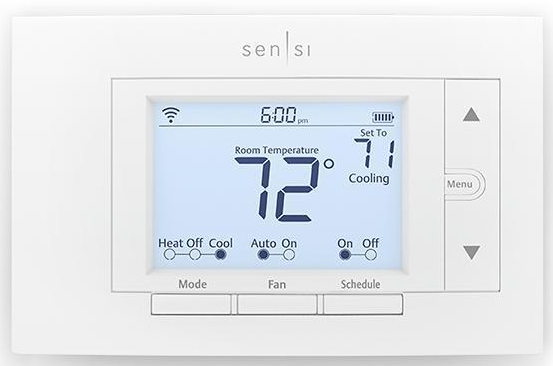
Why can’t they make a thermostat that can keep the house at a constant temperature?
Someone asked me this question, and I live this reality every day. Let’s look at what’s involved!
Each room in the house has its own thermal loss and gain. To simplify, this is directly related to the difference between the indoor and outdoor temperatures. This is mostly true but other effects like sun shining, people, electronic devices etc. all affect the equation. But for now, think of each room as a thermally insulated box losing a certain amount of energy over time when it’s cold out (this discussion applies to air conditioning also, just in reverse).
Continue readingDo you have to clean solar panels?
Years ago, shortly after putting solar panels on my house, I ran some tests to see if cleaning my panels of pollen made a difference. At the time, I found minimal difference in the output of my entire system so I concluded that I didn’t really have to worry about keeping the panels clean. Plus, most of the on-line info I found supported this, stating that rain naturally washes away most of the debris that settles on the panels.
However, this past year, I upgraded my system with solar optimizers. Due to tree growth, my array was having more problems from shading, causing the entire system performance to degrade. Optimizers allow each panel to operate more independently, reducing the negative effect of shading on one panel. In addition, the optimizers were connected to the internet, allowing me to monitor the output of each individual panel. Most modern systems provide this capability. It’s an extremely powerful troubleshooting tool.
As an energy geek, I wanted to see how my panels were performing after installing the optimizers, since I paid a good chunk of change for the upgrade. Sadly, when I compared my system output to past years, I didn’t really see much, if any improvement! Why would this be?
Continue readingIs Geothermal Worth It?
On paper, geothermal, or more accurately, Ground Source Heat Pumps (GSHP), are amazing. They pump out endless heat during the winter and cold during the summer at costs that are often much lower than conventional heat pumps. They don’t pollute (directly). They’re quiet, comfortable and, when properly maintained, should last decades.
But what’s the reality? Are geothermal heat pumps really worth it? Keep reading to learn the answers!
Continue readingWhy is my house so humid?
I received an excellent question today, in a nutshell it was: “Why is my house so humid that condensation is dripping from the ceiling?”
The questioner reminded me of all the times I’ve heard this question, both on this blog and when I was in the field, helping track down issues in people’s homes. Clearly this is serious issue that needs more attention because it leads to problems with a home’s health, comfort and efficiency – exactly the things I focus on! (I also wrote extensively on this in a previous article: “Cathedral Ceilings – Mold and Moisture”)
 Ted's Energy Tips