Unknown's avatar

About T.D. Inoue

Ex-digital imaging entrepreneur, Green building advisor, professional problem solver. Amateur chef. Avid ice cream maker and general troublemaker

Insulating Basement Crawl Spaces

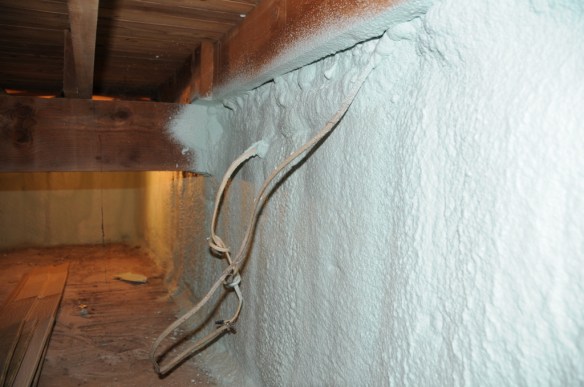
Spray foam on crawlspace walls

Crawlspaces – those nasty, damp, moldy spaces under your home that you dread entering. They’re one of the least understood parts of a home and the source of countless problems. In this post, I’ll review some of the worst problems and how to avoid them.

Crawlspaces often have two big issues:

  1. Water / moisture – leading to mold and wood rot
  2. Cold / drafty – leading to uncomfortable conditions and wasted energy

Continue reading

How NOT to insulate your house

Sometimes insulation hides bigger problems.

The other day, I was talking with a friend of mine – an energy auditor who was a builder for decades. The topic came around to bad advice that “experts” give about insulating. It’s something that we both feel passionate about because homes get ruined and people get sick when innocent people follow this bad advice. We both adhere to a similar do no harm philosophy of  “if it’s worked for decades as-is, don’t mess it up!”

There’s a science to building and the tighter and more energy efficient you make a home, the more important it is that you do things “right.” It’s like the difference between making a log raft and a submarine. A log raft is leaky, but it’s forgiving because it floats by virtue of the logs. It doesn’t have to be water-tight. A submarine had better be water tight and structurally sound or you’re going to drown and get crushed by the intense pressures of the ocean.

Unfortunately, unlike boats and submarines, homes today are often built in the cheapest way possible, with little regard to physics. Renovations are even worse because people often hire unqualified “low-bid” contractors to do the work without realizing that the few thousand dollars that they save on construction may cost them tens of thousands to fix or even send them to the hospital due to mold or poor indoor air quality.

The problem is, people familiar with building science are extremely rare, as are the chances of finding a builder who knows how to make a healthy, energy efficient home. That’s why you’re here reading this now – you want to learn what not to do when insulating and how to do it right.

Continue reading

High Efficiency Outdoor and Landscape Lighting

I’m personally not a big fan of landscape lighting, because 99% of the time you don’t need it at all. As they say in the business: “the most efficient light is the light that you don’t use.” But for many, landscape lighting is a necessity. In this post, I’ll cover several ways you can reduce the energy used for your outdoor lighting. How does a 98% saving sound? Unbelievable? Read on! Continue reading

Do you wonder why your house gets dusty so fast?

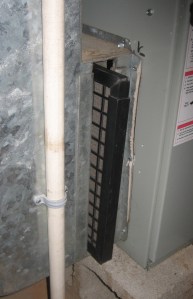
Do you have something like this in your attic?

Do you feel like your house is always dusty, in spite of how much you vacuum and clean? Have you tried all the tricks – HEPA vacuum cleaners, air cleaners, taking your shoes off before coming in the house, washing the dog…. all to no avail?

Chances are good that you’re being plagued by a leaky duct and air handling system.

When you have leaks in your ducts (virtually all duct are leaky) dust from the attic gets sucked into the ducts and distributed throughout the house. Even if you have an excellent filtration system on your air handler, the dust can be sucked in from places that don’t get filtered, and blown into your home, usually leaving fine gray dust everywhere.

Before you call in a heating/cooling (HVAC) contractor, there are a few steps that you can take yourself.

Continue reading

Weekend movie: A Crude Awakening: The Oil Crash

I admit, all movies about peak oil are designed in such a way as to alarm the viewer. But is that a bad thing? Oil is the “bloodstream of the economy.” When oil prices are low, the economy thrives. When it is high, like it is now, the economy tanks.

A Crude Awakening was released in 2006 – it was made well before the super-spike in oil prices in 2008. In fact, when this documentary was made, oil prices were about $40 a barrel. When it was released, many people ignored the message, saying that it was crazy to think that the price of oil would go up dramatically. After all, for most of our lives, oil has been cheap an plentiful. So it was easy to ignore peak oil.

Oil is now hovering at around $100 per barrel. In real terms, it now costs $3.25-$3.50/gallon to heat your home with oil. Back when the movie was made, home oil prices were about $1/gallon. Gasoline prices have similarly changed. This is not some abstract concept, this is our daily reality.

Continue reading

5 Things to consider when replacing your heating system

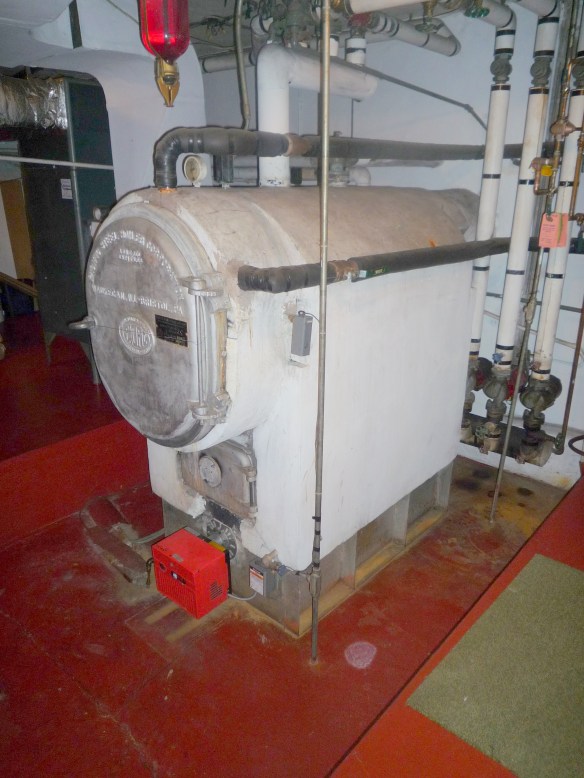
A big old boiler

#1: Research replacement systems before your current system dies

Hopefully, you’re reading this before you need to replace your heating system. Other than buying a car, a new heating system is likely to be the biggest single item you’ll purchase for your home. And just like a car, you want to do your research before plunking down the the ten grand on something you’ll be living with for years.

Unfortunately, most people wait until their heating system dies – usually in the dead of winter. What ensues is an emergency phone-call to your “heating guy” who will either replace your system with exactly the same, inefficient, old unit you already have or whatever he’s got on the truck, most likely the latter.

You wouldn’t buy a car this way, would you? You wouldn’t call your car dealership and say “my car broke down, sell me what you’ve got. Maybe give me a few options for different cars.”

Continue reading

Why do I have moisture in my walls?

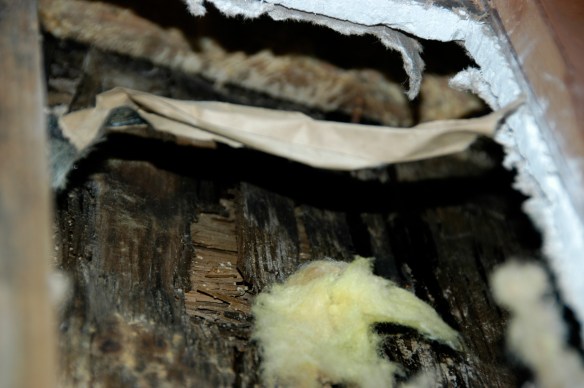
The inside of a wall filled with entrapped moisture

I just received a question that was too complex to answer quickly, and so interesting that it deserves an entire post. Unfortunately, it represents a situation that occurs far too often.

To summarize, the question came from a reader who opened a small hole in their wall and found condensation on the vapor barrier at the inner surface of the wall. The question is, what could cause this?

Here are some more clues:

  • The moisture was observed during the winter
  • The hole was cut in a south wall
  • The home has 3″ foam board sealed to the exterior wall
  • A 2×4 framed wall was built inside this wall and insulated with Roxul
  • A 6-mil poly vapor barrier was then applied just behind the inner sheet rock
  • They did not measure high moisture towards the outer wall
  • The wall was built during a humid summer

Continue reading

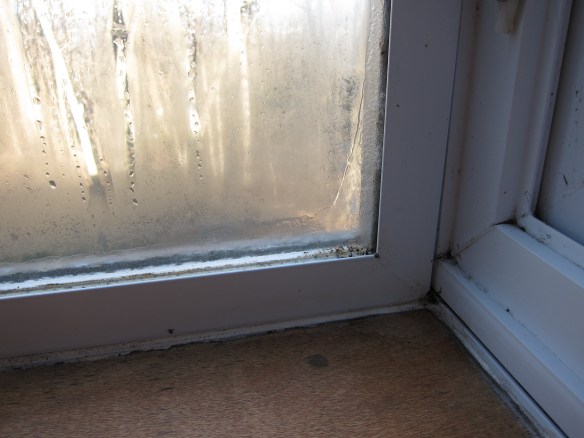
Is condensation bad for windows?

Bathroom windows will almost always "sweat" in the winter

When cold weather sets in, I invariably get a slew of questions from people worried about their windows “sweating.” There’s a perception, propagated by window salespeople, that condensation is a  sure sign that you need to buy new windows for your home. What’s the truth?

The photo above is of a north facing garden window in my master bathroom. In general, I keep the humidity quite moderate in my home but this window definitely shows more condensation than others. In this case, during a spell of temperatures in the low teens, a layer of ice even formed. Should I replace this window?

Continue reading

Understanding and Evaluating Heat Pumps

Heat pumps are a bit of magic. But you use one in your home every day – your refrigerator. So if you can accept that your fridge works, somehow making 0 degree air from the 70 degree air in your home, plus some compressor action, then you should be able to accept that heat pumps can produce 95 degree air to heat your home while it’s 25 degrees outside.

I’m not going to subject you to a full lesson on thermodynamics and the refrigeration cycle. Instead, I just want you to accept the fact that heat pumps work on the same principles as refrigerators and air conditioners – they move energy from one place to another. In the process, they make one side of the system hotter and the other side colder.

Heat pumps, refrigerators and air conditioners all work the same way – they move heat from one place to another, amplifying the effect using a compressor and refrigerants.

Continue reading

Don’t let hacks destroy your home

A once beautiful tree, destroyed by shady contractors

About every five years, some contractor does something horrible to my home and each time I swear it will never happen again. It’s things like this that convinced me to get into the consulting business in the first place. There’s only so much you can know so what’s a homeowner to do?

First, let me describe what happened here. Continue reading