I just received a G7 LED flood light and it’s so impressive, I had to write about it immediately. This may very well be the LED bulb for recessed lights that we’ve all been waiting for – it’s that good!
What makes it so good?
I just received a G7 LED flood light and it’s so impressive, I had to write about it immediately. This may very well be the LED bulb for recessed lights that we’ve all been waiting for – it’s that good!
What makes it so good?
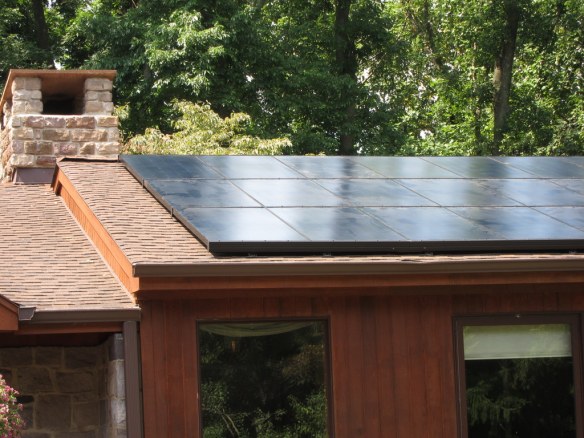
Now that I’ve had my panels installed for over a full month, do they really work as advertised?
The short answer is Yes! I’ve been very happy with the amount of electricity produced by the panels, in spite of the fact that this August has been quite rainy. Especially when compared to June and July which were sunny and hot! But that’s life in Eastern Pennsylvania. We have real weather here!
Time to start using all that wasted rooftop space in cities!
While not every building will be amenable to rooftop farming or other forms of green roofs, the success (or failure) of this project will pave the way for future urban farming efforts. The article states that the farm should produce up to a million pounds of food, or about what is needed for 5,000 residents. In a city of many millions, this may not seem like much, but we’re learning that every bit counts.
Lovins and the Rocky Mountain Institute (RMI) are a source of practical solutions to big problems. In this video, Lovins discusses how we as a society can live more securely and save money while eliminating our use of oil and other fossil fuels.
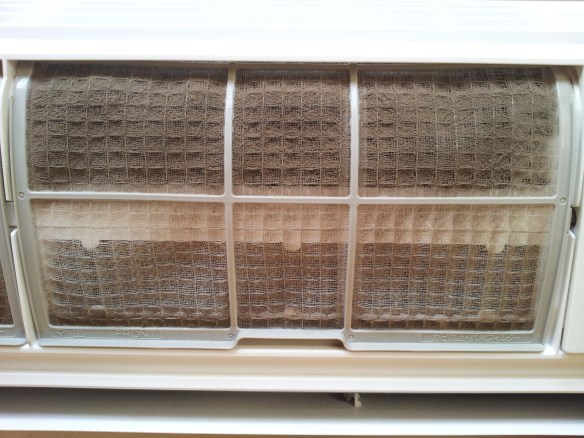
After receiving a question recently about cleaning the Fujitsu’s air filters, I thought I’d better check mine. Good thing – yuck!
Fortunately, a quick spray down in the sink and they’re good as new. Just remember to spray from the back side to blow the gunk out of the filter. Also, let the filters dry out before using them.
In addition to the two large mesh filters, there are a small foam and pleated filter below them. Clean and dry those and you’re good to go.
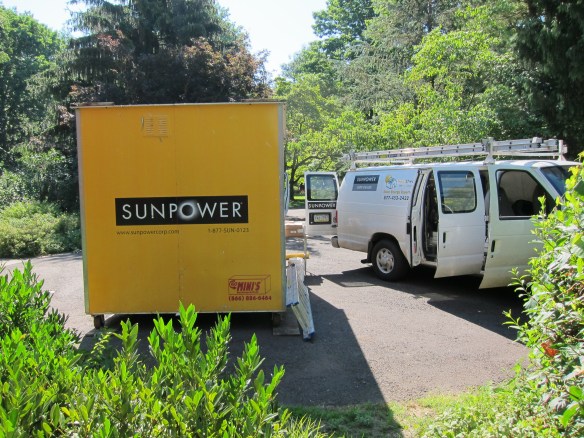
After deciding on an installer and signing the paperwork, the equipment arrives. In this case, we went with Heat Shed as our installer and Sunpower, one of the major Solar manufacturers, for the panels. Continue reading
Solar photovoltaic (PV) systems have been a hot topic of discussion for decades, but it hasn’t been until recently that they have become truly economically viable. Instead, they were purchased for a variety of other reasons. But now, it can be far better than money in the bank.
Last year, my wife and I started evaluating options for installing a solar system. We wanted something that looked aesthetically pleasing, was cost effective, and provided enough power to significantly offset our electric bills. Initially, we thought that we were going to go with “solar shingles”. These have really come a long way in the last couple of years both in cost and efficiency.
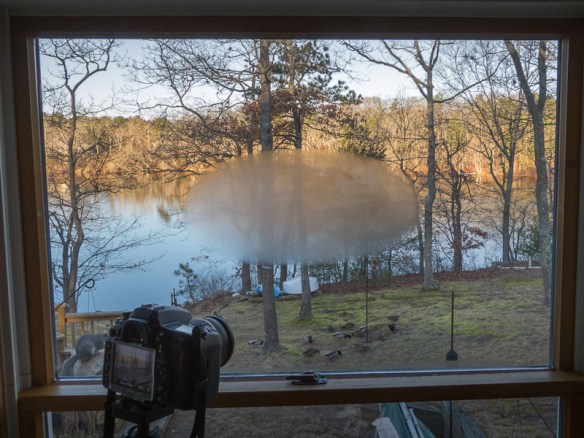
I was recently visiting my brother and he pointed out a strange condensation effect he was having on some double glazed windows. Condensation formed in an oval pattern in the middle of the windows. This is really strange because condensation forms on the coldest parts of windows first. Thermal windows usually insulate best at their centers so condensation starts forming at the edges. But these windows were showing exactly the opposite condensation pattern as shown in the photo above.
I recently overheard a conversation that made me think. A man, who was clearly respected by his friends as someone knowledgeable, commented that solar wasn’t ready for prime time because it isn’t efficient enough. But is this true?
The simple answer is “no.” Solar is plenty efficient. The solar electric panels that go on your roof are 15%-20% efficient. Solar hot water systems are about three times more efficient since they heat water directly. So the most intelligent system consists of a couple of solar hot water panels and a roof full of photovoltaic (electric) panels.
But still, you might be waiting for systems to get much more efficient. After all, semiconductors get faster and cheaper every year. If you did this, you’d be making a mistake.
Lovins is one of those rare people who have spent his entire adult life studying one thing – in this case “energy.” As far back as his first year of college, before the oil embargo of the 1970’s, he’s thrown himself into the field.
In this interview with Charlie Rose, Lovins frankly discusses where we are now, how we got here, and what we can do. It’s well worth a listen even if you’re already familiar with Lovins and his work.