A family friend recently told me of “issues” with their home heating system – “when it runs, the lights get halos around them from all the soot in the air.”
I couldn’t believe it when I heard this, and immediately warned him that the condition likely is making his family sick and could easily kill them. No joke.
Carbon monoxide poisoning is the “leading cause of accidental poisoning deaths in America” – it’s colorless, odorless and quickly affects your brain, knocking you out then killing you. In lower amounts, it can lead to chronic headaches, dizziness, depression, nausea and a host of other problems.
As we tighten up our homes to make them more energy efficient, we have to be particularly vigilant about keeping any combustion devices in the home tuned up and properly vented.
I bumped this back up to top of the list since it’s one of the most popular posts I’ve ever done. I also just had the misfortune of losing ALL THREE indoor units during a recent storm and power surge that killed appliances all around my development. Argh! However, they’re up and running again, good as new.
I love these heat pumps! There’s one in the bedroom, one in the basement “party room” and one in the large, living room that’s full of windows – a space that has been uncomfortable for years.
After installing these systems, I don’t know how we dealt without them before. The summer comfort is waaay better than ever. And in our basement room, I turned off the main heating system and used the Fujitsu exclusively all winter.
Keep in mind that this is one special little unit. There are many mini-split systems on the market that look like this, but most of them are barely half as efficient as this one. They’re just not in the same league.
This is wasting more energy than leaving a window open
I admit it – I go crazy when I see leaky ducts. I’m not talking about ducts that have little leaks, I’m talking about problems that cost you hundreds of dollars per year and could be fixed in a few minutes with a piece of tape.
Incompetent heating contractors hate me. Why? Because I’m on a mission to give you the information you need to know when they’re ripping you off. On the other hand, quality contractors love my information because I arm you with knowledge so you can tell the difference between the good ones and the bad ones.
If you live in or near New Jersey, it’s worth the trip to your local Home Depot because you can get LED bulbs for half price!
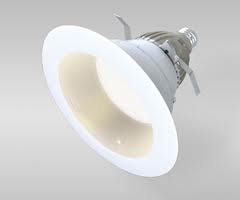
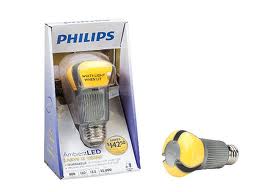
New Jersey is very progressive when it comes to alternative energy and rebates for energy efficiency. They’ve always had some of the best prices on fluorescent bulbs. But I was pleasantly surprised to find them offering the CREE CR6 dimmable LED recessed light retrofit unit for $24.95. This is a fantastic deal. In addition, they have the Phillips 800 Lumen Edison style bulbs for $14.95. These two bulbs, IMHO, are the best LED replacements on the market. Both dim very well with standard Lutron dimmers and cast pleasant light.
Both of these are such awesome deals that I bought two of each.
In this third film posting, I bring you the sobering movie – “The End of Suburbia”
The natural phenomenon of “Peak Oil” is what got me deep into energy efficiency, so it seemed appropriate to share this movie.
Keep in mind – peak oil is not a theory – it is a mathematical certainty. Peak oil simply refers to the point at which we have pumped out half of all the oil that is in the earth. Peak oil does not by itself tell us about how fast we’ll run out of oil. However, when you combine knowledge of the peak with the consumption rate, you can project the decline rate.
Given that the world population continues to grow and the standards of living in the worlds most populous nations are improving, our rate of energy consumption is projected to increase. This is where peak oil gets really important. Virtually everything about our culture and lifestyle depends on having an essentially infinite supply of energy, and much of our energy comes from oil.
What can we do about it?
Several years ago, a friend of mine, Kevin Deeny, an environmental engineer from the mother of all suburbs, Levittown, Pennsylvania, decided to make it his personal mission to learn how to make homes much more energy efficient so that he could share that with his community and the world. He studied these homes; reviewed utility bills; and talked to owners. He also used himself and his family as guinea pigs – trying things to make the homes more energy efficient.
I was amazed to learn that we could reduce the overall energy consumption of these Levittown homes by 50% through straightforward improvements. Things we all know, like improving insulation, making homes tigher, and upgrading heating/cooling systems. But the really interesting thing was that in Levittown, there are only six models of home in more than 17,000 houses. So by studying just six models, he could create “blueprints for efficiency” that could then be applied to all 17,000.
Kevin had numerous meetings with politicians and local residents. He applied for government grants and spent countless hours of his time trying to get people to listen. He had a plan that could employ hundreds of local contractors and help cut utility bills in half. But few people listened. Time and again, he talked to policy makers, but all they were interested in was how to get elected.
To make it even more frustrating, Kevin’s plans show how we can make virtually any development of homes more efficient. Every time a group of houses is built, you have a limited number of architectural plans. You also have a crew and construction chiefs who use the same construction for every house. So a mistake made once is replicated among all the houses. Analyze a handful of homes and you can learn how to fix them all.
It is the work of passionate, dedicated individuals like Kevin Deeny that we will get us through the rough times ahead. But only if people listen. Unfortunately, until the pain of high utility bills affects homeowners to such an extent that they must listen, most will choose to bury their heads in the sand. Fortunately, those of you who read this blog are part of a growing minority – those who choose live a more efficient lifestyle. People who take personal responsibility in reducing energy consumption and pass your learnings on to future generations. Kudos to you. You are leading the way.
Being an evangelist for energy efficiency isn’t always easy. Nobody knows this better than Josh Tickell, creator of “Fuel” – a movie dedicated to exposing the sins of our addictions to oil.
No, this isn’t a feel-good holiday film. It’s an eye-opening expose that starts with showing us Tickell’s journey in his biodiesel fueld van and leading us through an exploration of the oil industry, and the harm it does to us, the people whose lives depend upon it.
Freezing temperatures are setting in around much of the country, so now what do you do? While each house is unique, there are some things to remember to avoid unpleasant surprises and expensive repairs later one.
#1: Winterize your outdoor water pipes
We all know, when pipes freeze, they often burst due to the extreme pressures exerted by the ice as it forms. If you have hoses outside, disconnect them from the faucet, drain the water that might be trapped in them, and store them for the winter.
If you have a pool or pond that needs winterization, make sure all exposed plumbing is drained. Some systems need to be filled with anti-freeze. Remember, any exposed pipes and even buried pipes, are likely to burst if there’s water in them over the winter.
Most homes have outdoor faucets for hoses. Modern faucets are “no-freeze” design, because they put the valve inside the house where the freeze hazard is lower. However, there are still millions of homes with older fixtures that get destroyed if not drained during the winter. Check your faucets for a shut-off valve inside the house and ensure that they’re drained properly.
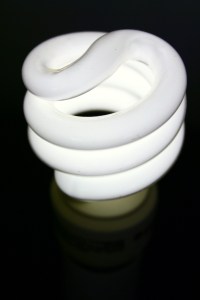
There’s a lot of debate about the danger of CFL’s due to the mercury they contain. But how much is it really? And what happens when the bulb breaks?
A recent study, reported in Home Energy Magazine, may surprise you. The study involved breaking new CFL bulbs from a variety of manufacturers and measuring how much mercury was released. To put it into context, they compared the amounts to eating a can of tuna fish – known to contain some mercury but also something most of us do regularly.
In order to really test for the worst case scenario, they tried to do things to make the conditions as bad as possible. Then they “sniffed” all the air with their measurements – the equivalent of sticking your nose right above the broken bulb and inhaling repeatedly as hard as possible. I mean, they really went out of their way to get the highest numbers possible! They noted:
“In short, everything possible was done to elevate the air concentration of mercury in the room. Even with all this, the one-hour average air concentration of mercury was 21,262 ng/m3 at 1 foot above the floor and 16,814 ng/m3 at 5 feet above the floor, well below the OSHA PEL of 100,000 ng/m3″
What does this mean? Those numbers sound really high, right?
Well, not so fast. It turns out that “a 6 oz portion of albacore tuna is about 63,344 ng. A 2 oz portion would contain about 21,448 ng of methylmercury.” So eating a small portion of tuna exposes you to more mercury than a worst case scenario with the broken bulb.
I should note, there is a difference between eating and inhaling mercury, and since nobody snorts tuna fish, the results aren’t exactly comparable. So keep that in mind. However, based on this study, I feel a lot better that I’m not putting my health at risk by using CFLs.
The article is short and practical, and I highly recommend anybody still worried about the risks of CFLs to read it.
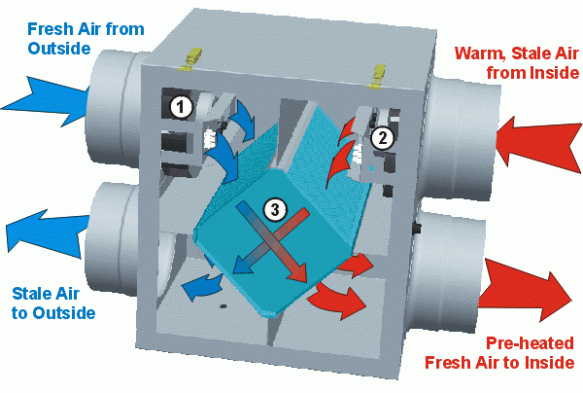
One of the best ways to get rid of smells or “staleness” in your house is to bring in fresh air. We all do this during these wonderful autumn days when we open the windows and let the fresh air flush out our home. Wouldn’t it be great to be able to have fresh air year round?
Some people try this by cracking the windows, but this has its downsides. During the winter, the outside air is cold and dry. When you bring in that air, you have to spend energy heating it. Plus, it’s so dry that it sucks the moisture out of the air, leading to uncomfortable conditions in the house.
I hope you’ve found Ted’s Energy Tips to be useful. If you’d like to help support my continued efforts, I’d gladly accept donations.
Since WordPress doesn’t allow me to put a donate button on this page, I have to ask you to use Paypal and click this link. I do this mainly as a public service, but a donation once in a a while reassures me that people actually care and motivates me to write more.




 Thanks so much for your support!
 Ted's Energy Tips